Vishwa Hindi Diwas 2026: Hindi as an Emotional Connector in a Global World

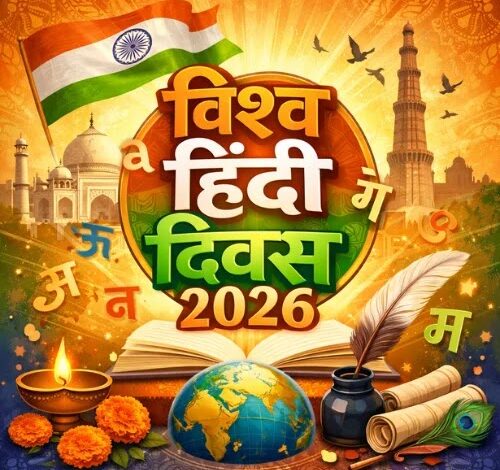
Vishwa Hindi Diwas, also known as World Hindi Day, is celebrated annually on January 10 to promote the Hindi language on a global scale and highlight its cultural, literary, and linguistic significance. In 2026, this day falls on a Saturday, providing an opportunity for worldwide communities to reflect on Hindi’s role as a bridge connecting millions across continents. Unlike National Hindi Diwas observed on September 14 in India to commemorate its adoption as an official language, Vishwa Hindi Diwas focuses on Hindi’s international presence and its potential as a unifying global voice. This celebration underscores Hindi’s evolution from a regional language to one spoken by over 600 million people worldwide, ranking it among the most widely used languages after Mandarin and English.
{tocify} $title={Table of Contents}
Historical Background
The origins of Vishwa Hindi Diwas trace back to January 10, 1975, when the first World Hindi Conference was held in Nagpur, India. This landmark event brought together scholars, writers, and enthusiasts from around the world to discuss Hindi’s promotion and preservation. Attended by delegates from multiple countries, the conference marked a pivotal moment in recognizing Hindi beyond India’s borders.
 |
| Vishwa Hindi Diwas |
In 2006, former Prime Minister Dr. Manmohan Singh officially declared January 10 as Vishwa Hindi Diwas to commemorate this conference and to foster the language’s global outreach. The initiative aimed to strengthen cultural ties through Hindi, especially among the Indian diaspora and in nations with historical connections to India. Since then, the day has been observed annually, with the Ministry of External Affairs playing a key role in organizing events through Indian embassies worldwide. This distinction from National Hindi Diwas—linked to September 14, 1949, when Hindi in Devanagari script was adopted as India’s official language under Article 343 of the Constitution—emphasizes Vishwa Hindi Diwas’s international focus.
Significance of Hindi in the Global Context
Hindi holds profound significance as a language of emotion, culture, and unity. Often described as an “emotional connector,” it evokes shared memories, traditions, and values that transcend geographical boundaries. In 2026, as the world becomes increasingly interconnected through digital platforms, Hindi’s role in soft diplomacy and cultural exchange has grown exponentially. Bollywood films, Hindi literature, and social media have propelled the language into global households, making it a medium for storytelling that resonates universally.
Hindi is not just India’s link language but a symbol of its diverse heritage. Spoken natively by hundreds of millions in the Hindi Belt states and as a second language elsewhere, it fosters national integration within India. Globally, it connects the Indian diaspora in countries like the United States, United Kingdom, Fiji, Mauritius, Suriname, and Nepal. Efforts to include Hindi as an official language in the United Nations continue, reflecting aspirations for greater international recognition. In an era of globalization, promoting Hindi helps preserve linguistic diversity while countering the dominance of a few languages, encouraging multilingualism and cultural pride.
Celebrations in 2026
Vishwa Hindi Diwas 2026 witnessed vibrant celebrations across the globe, emphasizing Hindi’s growing influence. In Beijing, the Indian Embassy hosted a notable event attended by teachers and students from prestigious Chinese universities such as Tsinghua and Peking. Ambassador Pradeep Kumar Rawat highlighted Hindi’s role in strengthening India-China ties, with participants engaging in competitions like story writing, poetry recitation, and short video presentations. Cultural performances, including Bollywood songs, added to the festive atmosphere, showcasing Hindi as a cultural bridge.
In India, events ranged from school-level programs to community gatherings. For instance, in Karimnagar district, Telangana, innovative celebrations at Chigurumamidi featured student competitions in Hindi skills, inaugurated by education officials who stressed the language’s importance for national integration and career opportunities. Indian embassies in places like Nairobi and Washington DC organized contests, seminars, and honors for Hindi enthusiasts, with deadlines for submissions extending into early January. These activities included essay writing, debates, poetry recitals, and cultural programs, often involving the diaspora. The theme for 2026, echoing recent years, focused on Hindi as a “global voice of unity and cultural pride,” promoting its emotional depth and ability to unite generations.
Hindi’s Global Reach and Challenges
Hindi’s international footprint is impressive, bolstered by migration, media, and education. In countries with Indian indentured labor history, like Fiji and Mauritius, Hindi remains vibrant in daily life and festivals. Universities worldwide offer Hindi courses, and online platforms have democratized learning, with millions accessing Hindi content on YouTube, Netflix, and social media.
However, challenges persist. In India, the preference for English in education and professional spheres sometimes sidelines Hindi. Globally, limited official status hinders its growth compared to languages like Spanish or French. Digital representation, while improving, needs further standardization in Unicode and AI tools. Despite these, initiatives like World Hindi Conferences (the 12th held in Fiji in recent years) and embassy-driven programs continue to address these issues.
Future Prospects and Conclusion
Looking ahead, Vishwa Hindi Diwas 2026 serves as a reminder of Hindi’s potential in a multipolar world. With India’s rising global influence, Hindi could emerge as a key language in international discourse, diplomacy, and trade. Encouraging its teaching in schools abroad, integrating it into technology, and producing more global content will be crucial.
In conclusion, Vishwa Hindi Diwas is more than a commemoration; it is a call to action for preserving and promoting a language rich in poetry, philosophy, and humanism. From Kabir’s dohas to modern literature by Premchand and contemporary writers, Hindi embodies India’s soul. As we celebrate in 2026, let us pledge to embrace Hindi not just as a mother tongue but as a world language that fosters understanding and harmony. By doing so, we honor its legacy and ensure its vibrant future for generations to come.
(FAQs) about Vishwa Hindi Diwas
Q. When is Vishwa Hindi Diwas celebrated?
Vishwa Hindi Diwas is celebrated every year on January 10. In 2026, it falls on a Saturday, providing a great opportunity for global events and programs.
Q. Why is Vishwa Hindi Diwas celebrated on January 10?
This date commemorates the first World Hindi Conference held in Nagpur, India, from January 10-12, 1975. The day was officially declared in 2006 by former Prime Minister Dr. Manmohan Singh to promote Hindi globally.
Q. What is the difference between Vishwa Hindi Diwas and National Hindi Diwas (or Rashtriya Hindi Diwas)?
Vishwa Hindi Diwas (January 10) focuses on promoting Hindi internationally, highlighting its global reach, cultural significance, and role among the Indian diaspora and worldwide learners.
National Hindi Diwas (September 14) commemorates the adoption of Hindi (in Devanagari script) as India’s official language by the Constituent Assembly on September 14, 1949, and emphasizes its use within India.
Q. What is the significance of Vishwa Hindi Diwas?
It aims to raise awareness about Hindi as one of the world’s most spoken languages (third or fourth globally, with over 600 million speakers), foster cultural pride, strengthen ties with the Indian diaspora, and promote Hindi in international forums like the United Nations. It celebrates Hindi’s role in unity, emotion, and soft diplomacy.
Q. How is Vishwa Hindi Diwas celebrated?
Celebrations include seminars, poetry recitations, essay competitions, cultural programs, and Bollywood events organized by Indian embassies worldwide, schools, and communities. In 2026, events featured participation from universities (e.g., in Beijing with Tsinghua and Peking University students) and focused on themes like Hindi as a bridge for cultural exchange.
Source link